
When you first dive into the world of electric bikes, the technical jargon can feel overwhelming. You’ll hear terms like "torque sensor," "watt-hours," and "controller," but the most critical decision you will make involves the placement of the motor. At Baicycle, we believe that understanding the "how" behind your ride is the first step to "Exploring Further."
The Hub Motor: The Reliable Commuter’s Choice
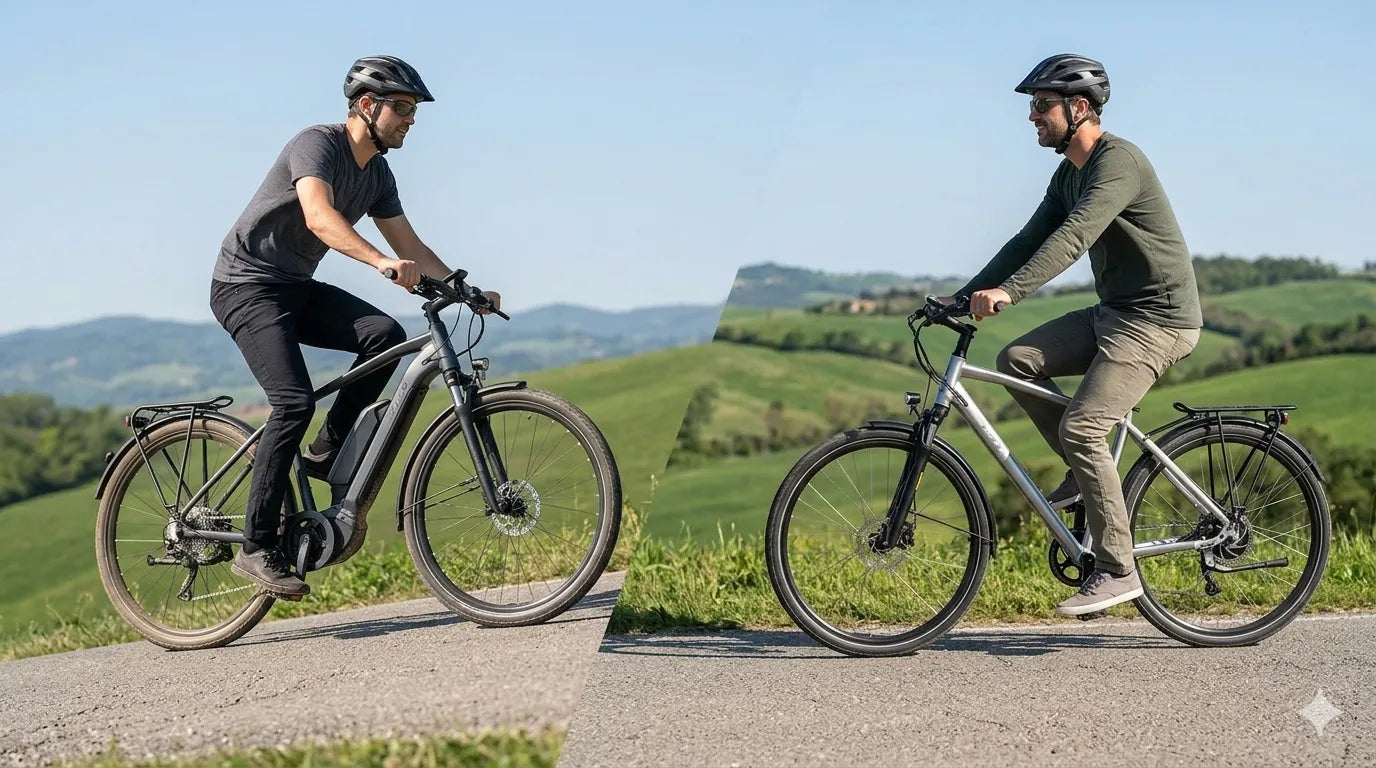
The hub motor is the most common type of drive system found on e-bikes today. As the name suggests, the motor is housed directly inside the hub of either the front or (more commonly) the rear wheel.
The Advantages:
-
Simplicity and Durability: Because the motor is a self-contained unit, it operates independently of your bike’s chain and gears. If your chain breaks, a hub motor can still get you home using the throttle.
-
Ease of Use: Hub motors are famously low-maintenance. They are sealed systems that rarely require internal servicing.
-
The "Push" Feeling: Riding a rear-hub motor feels like being pushed by a silent hand. It’s a smooth, consistent power delivery that is perfect for city streets.
The Trade-offs: Hub motors can make a bike feel slightly "back-heavy," and because they don't use the bike's gears, they can be less efficient on extremely steep, technical inclines.
The Mid-Drive Motor: The Performance Specialist
Mid-drive motors are located in the center of the bike, right between the pedals at the bottom bracket. This placement is generally found on premium models designed for high-performance riding.
The Advantages:
-
Mechanical Advantage: Unlike a hub motor, a mid-drive motor drives the crank, which allows it to work with the bike’s gears. If you’re climbing a steep hill, you can shift into a lower gear, and the motor will have more torque to help you up.
-
Natural Ride Feel: Most mid-drive systems use sophisticated torque sensors that measure how hard you are pedaling. The motor then provides power that matches your effort, making it feel like you simply have "super-human legs."
-
Perfect Balance: By placing the weight in the center and low to the ground, the bike handles much more like a traditional bicycle.
The Trade-offs: Mid-drive systems put more strain on your chain and cassette since the motor's power is going through the drivetrain. They also tend to be more expensive due to their complexity.
Which One Should You Choose?
If your goal is a reliable, sweat-free commute to work on mostly flat or moderately hilly pavement, the Hub Motor is likely your best bet. It’s cost-effective and rugged. However, if you live in a city like San Francisco with punishing hills, or if you plan on doing technical off-road trail riding, the Mid-Drive system will offer the performance and efficiency you need to conquer the terrain.

Leave a comment
This site is protected by hCaptcha and the hCaptcha Privacy Policy and Terms of Service apply.